
Joining the Euro
Bulgaria joined the Euro
On the 1st January 2026, Bulgaria officially joined the Euro. Having been pegged to the Euro, via the Deutschmark, since suffering hyperinflation in the 90s, this made some sort of sense. Support for the Euro was quite weak in the country, but the benefits should be reasonable. Not only for business, but also for the millions of Bulgarians who emigrated to other EU countries or do seasonal work their.
The Lev is still usable until the end of the month, but shops should only give change in Euros. When paying in Levs you get Euros back. This is confusing, especially to the older generations. Bus tickets in Plovdiv change from being 1 Lev to 0.51 Euro. We can't have anything being cheaper of course.
Here's a picture of the national side of six of the Euro coins:
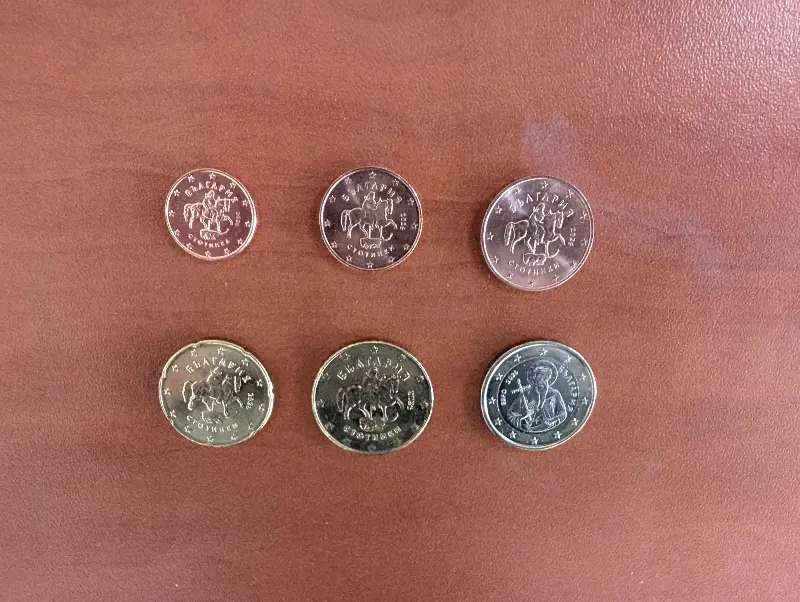
It's the same reverese side as on the current Lev coins, making the confusion complete as it still says стотинки (stotinki). This means "hundredth" in bulgarian, ie cents, so it makes sense, but they look identical to the Lev coins.
Trying to get a sizable amount of Levs converted to Euros was challenging, despite the promises of the government. Some banks insisted you had to be a client (not true), others that you could only exchange a small amount in one transaction (in fact the limit was around 30,000 Levs). We even tried going to the central bank office in Plovdiv. Apparently this contains the biggest safe in the Balkans. Accordingly, the people queueing there had lorries full of notes and coins. It took two hours per person, so we gave up on that idea. Towards the end of our week there things began to even out and we managed to get the money exchanged in two goes, once even on a Saturday.
Welcoming 🇧🇬 to the €uro.